Skull Bone Structure Interactive Diagram for Upper Secondary Biology
Explore the lateral view of the human skull with an interactive diagram highlighting 11 major bones, designed for upper secondary biology students.
Explore the lateral view of the human skull with an interactive diagram highlighting 11 major bones, designed for upper secondary biology students.
Explore the external anatomy of the human digestive system with this interactive diagram, highlighting key organs from mouth to rectum for biology education.
Explore the Earth's layers with this interactive diagram, ideal for teaching geography and environmental science concepts about the crust, mantle, and core.
Explore a detailed interactive diagram illustrating chromosome structure, including DNA double helix, chromatin, centromere, and sister chromatids for upper secondary biology.
Explore how X-rays reveal the atomic or ionic arrangement in crystals through diffraction patterns, essential for understanding crystal structures in chemistry.
Explore a detailed interactive diagram of a plant root cross-section, highlighting key tissues like epidermis, cortex, xylem, and phloem for all biology levels.
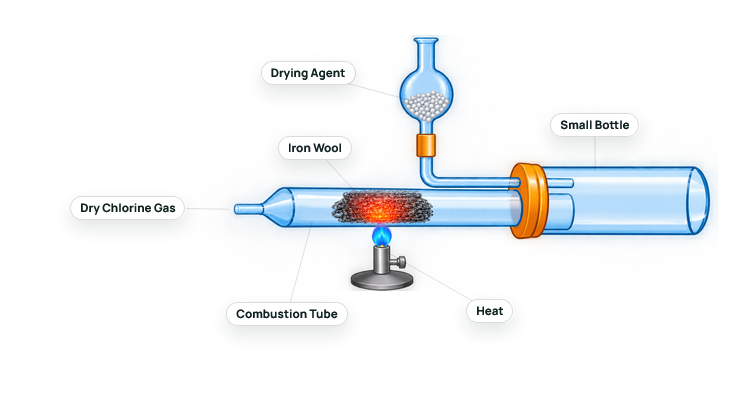
Explore the reaction of iron with chlorine gas through an interactive diagram, illustrating key apparatus and chemical processes for all chemistry levels.
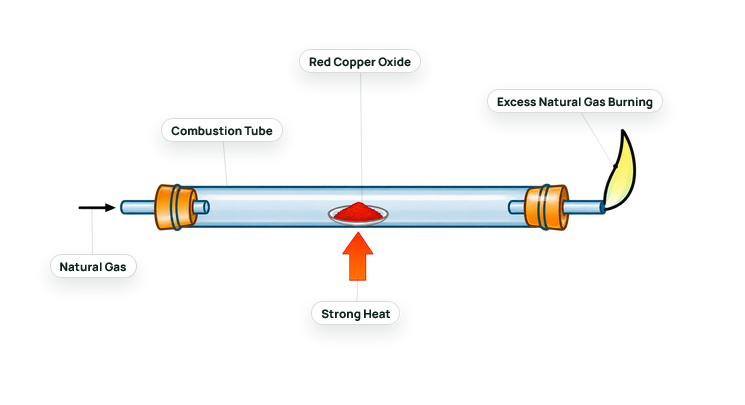
Explore the reduction of copper oxide by heating with natural gas through an interactive diagram illustrating key components and chemical changes in this redox reaction.
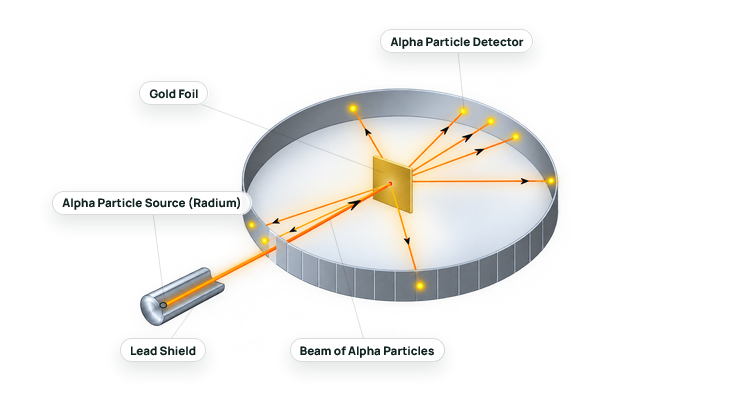
Explore Rutherford’s gold foil experiment with an interactive diagram showing alpha particle scattering and atomic structure concepts for all grades.
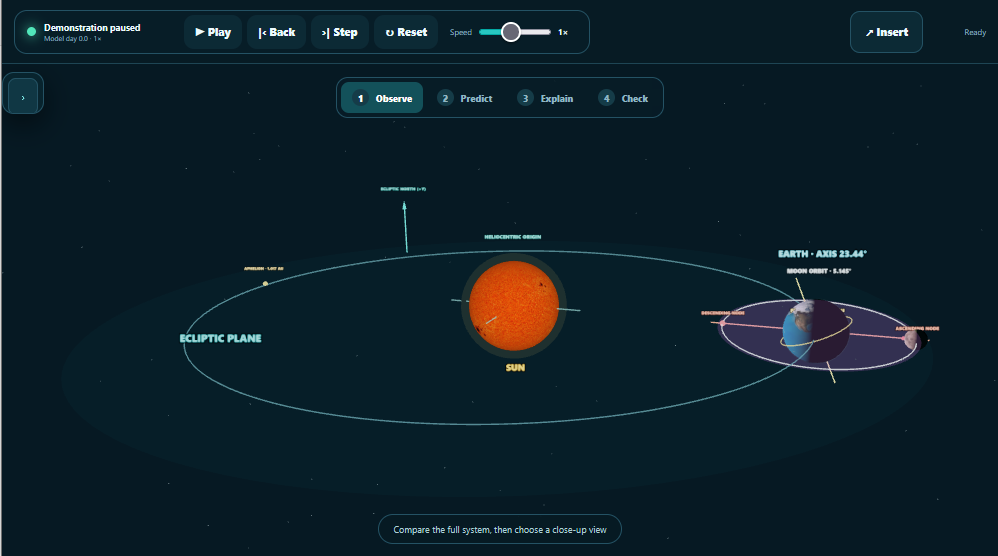
Explore the linked motions of the Sun, Earth and Moon with adjustable 2D and 3D visualisations. Understand Earth's rotation, revolution, and the Moon's orbit to enhance teaching of celestial mechanics.
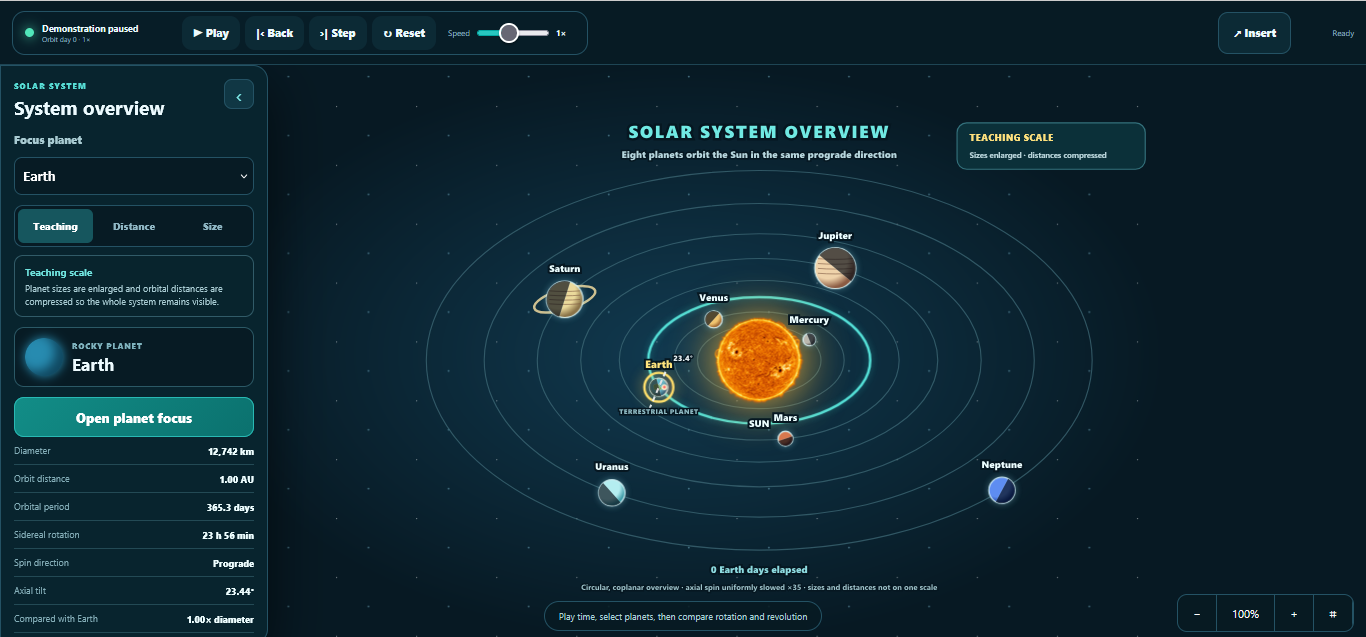
Discover the Solar System with animated orbits and comparative views of planets’ sizes, distances, and rotations. Ideal for teaching planetary science across all grades.
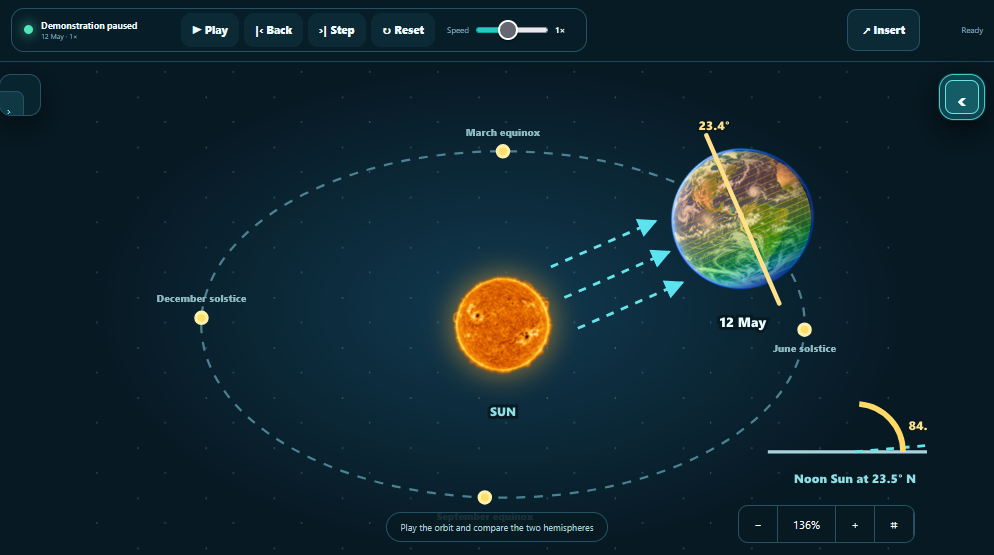
Explore why seasons occur through Earth's axial tilt and orbit. Learn about sunlight angles, daylight duration, solstices, equinoxes, and seasonal differences across hemispheres.
Create curriculum-ready lessons, present them live, and engage every student. Free for solo teachers.